Hicaru
A Journey of Musical Discovery, Cultural Exchange and Artistic Innovation
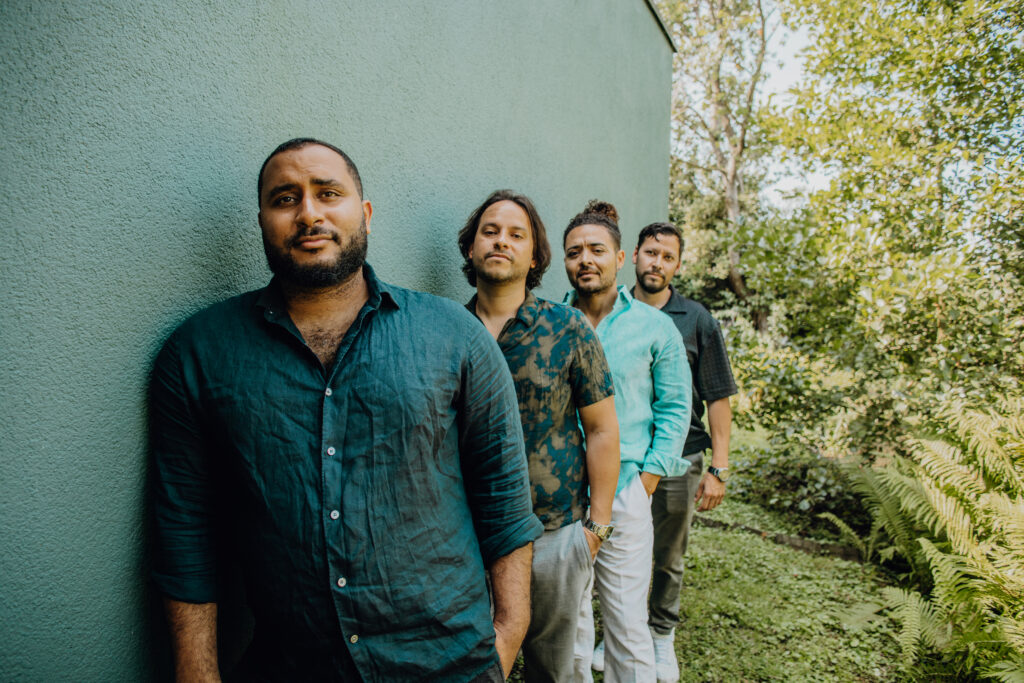
In June 2026, five Aruban musicians came together at Wedgeview Studios in the Netherlands to bring a shared artistic vision to life. Their goal was to record an album of original compositions that bridges the rich musical heritage of Aruba with contemporary jazz, Caribbean traditions, West African rhythmic concepts and European harmonic language.
Hicaru is far more than a recording project. It is an ongoing artistic development platform where research, composition, improvisation, education and cultural exchange continuously inspire one another. The project is rooted in the belief that cultural heritage should not only be preserved, but also be allowed to evolve through new artistic perspectives.
Our Vision
We believe music is a living language.
Traditions remain meaningful because every generation contributes new ideas while respecting the past. Hicaru explores how Aruban musical identity can continue to grow within today’s international jazz landscape.
Our compositions are inspired by traditional Aruban musical styles, including:
- Tumba
- Waltz
- Mazurka
- Polka
- Dansa
- Bailabel
- Ritmo Combina
These traditions are combined with influences from:
- Contemporary Jazz
- Gospel
- West African Highlife
- Haitian and Martinican music
- Brazilian rhythms
- European classical music
- Free improvisation
Rather than simply blending genres, Hicaru seeks to develop an entirely new musical language in which these traditions naturally coexist.
The Creative Process
Every composition begins with research.
The musicians analyze compositions, transcribe improvisations, study harmonic structures and experiment with new rhythmic relationships before entering the rehearsal room.
During rehearsals every musical idea is questioned, refined and developed collectively.
Some compositions evolve through many different versions before reaching their final form.
Improvisation plays a central role throughout the entire process.
Every musician contributes personal experiences, cultural influences and artistic ideas, allowing each composition to develop organically.
This collaborative approach defines the identity of Hicaru.
Phase I
Research and Composition
The first phase of Hicaru focused entirely on artistic research and composition.
Pianist and composer Kyle Winklaar explored how traditional Aruban rhythms could be integrated with contemporary jazz harmony and West African rhythmic concepts while maintaining their original cultural identity.
Particular attention was given to studying the work of internationally respected musicians such as:
- Grégory Privat
- Victor Dey Jr.
- Ivan Jansen
Their compositions and improvisations were carefully analyzed and transcribed to better understand their harmonic language, melodic development, rhythmic phrasing and approaches to interaction.
At the same time, inspiration was drawn from Kyle’s previous artistic projects, including Balor and Tecla i Tambú, both of which explored new relationships between Caribbean traditions and contemporary jazz.
These studies became the foundation for an entirely new collection of original compositions.
Phase II
Audio and Visual Production
From 21 to 26 June 2026, the ensemble gathered at Wedgeview Studios in the Netherlands for the recording sessions.
21–23 June
The first three days were dedicated to intensive rehearsals.
During this period the musicians refined arrangements, developed improvisational concepts and strengthened the collective interaction within the ensemble.
Every rehearsal created space for experimentation, allowing ideas to grow naturally before entering the studio.
24–26 June
The final three days focused on recording the original compositions.
Because interaction is an essential element of the music, most performances were recorded live in the studio to preserve spontaneity, communication and musical energy.
25 June
Alongside the recording sessions, the visual identity of Hicaru was created through:
- Professional photography
- Video production
- Artist interviews
- Social media content
- Music video production
This material documents not only the music itself but also the artistic journey behind the project.
Production Team
The artistic quality of Hicaru is supported by an experienced creative team.
Recording Studio: Wedgeview Studios
Audio Mixing: Udo Pannekeet
Audio Mastering: Marc Bischoff
Videography: Mourit van Dinter
Photography: Nienke de Groot
Together they ensure that both the musical and visual identity of Hicaru reflects the highest artistic standards.
Phase III
Sharing the Music
Following the completion of production, Hicaru begins its concert tour across the Dutch Caribbean in November 2026.
The first performances are scheduled at:
- Cas di Cultura — Aruba
- Porter Street Café — Curaçao
- Saca — Bonaire
These performances are designed to be more than concerts.
Each event offers audiences an opportunity to experience the creative process behind the music through conversations, artistic presentations and educational activities.
Where possible, concerts will be combined with workshops and masterclasses focusing on composition, improvisation, rhythmic traditions and contemporary Caribbean jazz.
Education
Education is one of the foundations of Hicaru.
We believe creativity flourishes when musicians feel free to explore without fear of making mistakes.
Our educational philosophy encourages young musicians to compose and improvise without self-judgment or creative limitations.
Through collective music-making, participants develop listening skills, confidence, communication and artistic curiosity.
Our workshops demonstrate how traditional Aruban music can continue to evolve while remaining connected to its cultural roots.
By connecting heritage with innovation, we hope to inspire a new generation of composers, performers and creative thinkers.
Why Hicaru?
Hicaru demonstrates that Aruban music continues to evolve.
Through artistic research, collaboration and creative exploration, we are building a contemporary Caribbean jazz language that honors tradition while embracing innovation.
The project invites musicians, students and audiences to discover how cultural heritage can become a source of new artistic possibilities rather than something fixed in the past.
For us, Hicaru is not a final destination—it is the beginning of a long-term artistic journey that connects people, cultures and generations through music.
Project Hicaru made possible by Fonds Podiumkunsten en Cultuurfonds Caribisch Gebied.